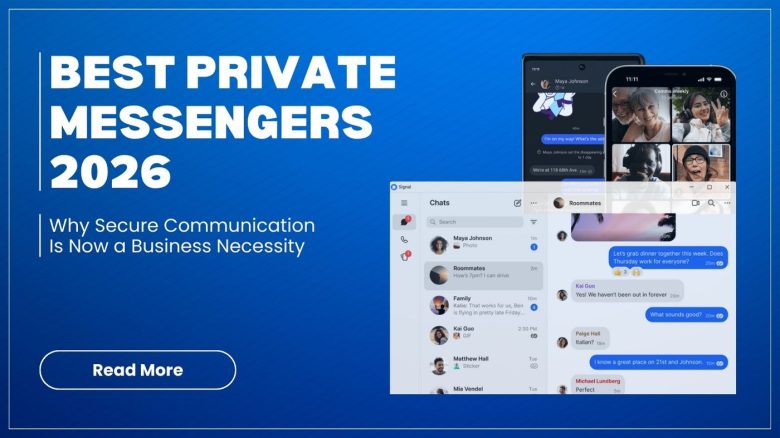
Digital communication in 2026 is fast, global, and always-on. But it is also increasingly monitored, monetized, and analyzed. For professionals, founders, IT leaders, and cybersecurity-conscious users, secure communication and digital privacy are no longer optional—they are a core operational requirement.
In this context, Signal Messenger continues to stand out as one of the most trusted platforms for private communication. Signal represents a rare combination of strong cryptography, ethical governance, and practical usability—especially for desktop users who rely on secure messaging in daily workflows.
This post takes a practical, professional look at the best private messengers to use in 2026, with a clear focus on what actually matters: privacy, security, transparency, and performance.
Why Secure Messaging Matters More Than Ever
Over the past few years, we’ve seen a major shift in how communication tools are evaluated. It’s no longer just about features or convenience—it’s about risk exposure.
Organizations and individuals now face:
-
Aggressive data harvesting and behavioral tracking
-
Metadata analysis that maps relationships and habits
-
AI-driven content scanning and profiling
-
Cloud-based backups that weaken encryption
-
Regulatory and compliance pressures
Even platforms that advertise encryption often collect who you talk to, when, how often, and from where. In many cases, that metadata is more revealing than message content itself.
For cybersecurity-aware professionals, this creates a simple question
Can you trust your messenger not to become a liability?
What Defines a Truly Private Messenger in 2026?
Before naming tools, it’s important to clarify the criteria that actually matter in a professional and security-focused context.
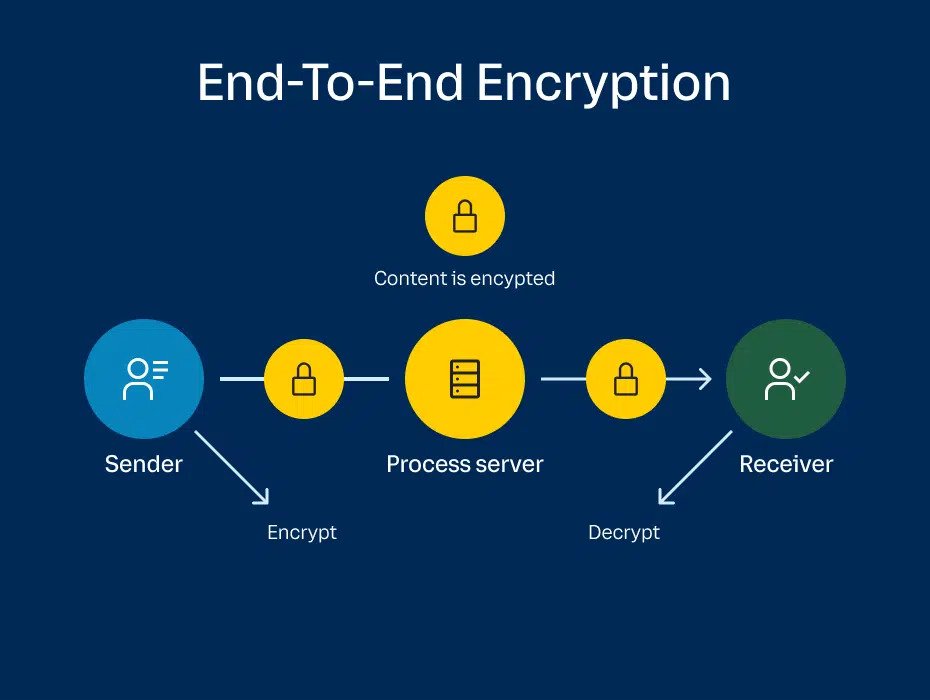
1. Real End-to-End Encryption
Messages must be encrypted on the sender’s device and decrypted only on the recipient’s device. No exceptions.
2. Minimal Metadata by Design
Privacy is not just about encryption—it’s about limiting data collection altogether.
3. Transparent, Auditable Code
Open-source software allows independent verification and builds long-term trust.
4. Independent Governance
Advertising-driven platforms have incentives that often conflict with user privacy.
5. Desktop-Grade Performance
Modern work happens on laptops and desktops. Secure communication must support this reality.
Signal Messenger: Privacy Without Compromise
Signal consistently meets—and exceeds—these standards.
Independent and Non-Profit by Design
Signal is operated by an independent, non-profit organization. This structure is not a marketing detail—it is a foundational security advantage.

-
No ads
-
No trackers
-
No user profiling
-
No data resale
Signal is funded through donations, not user data. That single fact explains many of its design decisions.
State-of-the-Art End-to-End Encryption
Signal uses the Signal Protocol, widely regarded as one of the most secure messaging protocols ever created. Its cryptographic design includes:
-
Forward secrecy
-
Encrypted group messaging
-
Encrypted voice and video calls
-
Sealed sender technology to hide metadata
Importantly, Signal cannot read your messages—even if compelled. The system is engineered so that access is technically impossible.
Signal Is Not Just a Mobile App — Desktop Support That Professionals Need
One of the most overlooked strengths of Signal is its high-performance desktop application.

Signal offers native desktop apps for:
-
Windows
-
macOS
-
Linux
This is critical for professionals who spend most of their day working from a computer.
Why Signal Desktop Matters
The desktop version is not an afterthought. It provides:
-
Secure message synchronization (linked, not mirrored insecurely)
-
Encrypted voice and video calls
-
Secure file sharing
-
Fast, lightweight performance
-
A clean, distraction-free interface
Unlike browser-based messaging tools, Signal Desktop runs as a native application, offering better isolation, reliability, and security.
For developers, security teams, journalists, consultants, and remote-first businesses, this makes Signal a practical daily communication platform—not just a backup option.
No Ads. No Tracking. No Surveillance Business Model.
Many messaging platforms claim to be “free,” but are funded through:
-
Advertising networks
-
Analytics SDKs
-
Data partnerships
Signal deliberately avoids all of this.
There are:
-
No advertising identifiers
-
No third-party analytics
-
No behavioral tracking
This results in not only stronger privacy, but also:
-
Better performance
-
Smaller attack surface
-
Lower risk of supply-chain vulnerabilities
From a security architecture perspective, simplicity is a feature.
Other Private Messengers Worth Knowing in 2026
While Signal remains the most balanced option, there are other privacy-focused tools depending on specific needs.
Session
A decentralized messenger that avoids phone numbers and central servers. Strong anonymity model, but slower and less polished for business use.
Threema
A paid, privacy-first messenger with solid encryption. Limited adoption and less robust desktop experience.
Wire
Well-suited for enterprise collaboration with encrypted messaging and calls. More business-oriented and less strict on metadata minimization.
Element (Matrix)
An open, federated network with strong technical foundations. Best suited for advanced users comfortable managing servers and configurations.
Each has merit, but none consistently match Signal’s combination of usability, security, and ethical governance.
Why Security Professionals Continue to Recommend Signal
Signal is widely recommended by:
-
Cybersecurity researchers
-
Cryptographers
-
Journalists
-
Privacy advocates
The reasons are consistent:
-
Auditable, open-source code
-
Conservative, well-reviewed cryptography
-
Privacy-first defaults
-
Long-term trust model
Signal does not rely on users to “configure security correctly.” It is secure by default.
Real-World Use Cases in 2026
Signal is now used for:
-
Internal business communication
-
Secure client discussions
-
Remote team collaboration
-
Journalistic source protection
-
Personal and family messaging
With full desktop support, it fits seamlessly into modern hybrid and remote work environments.
Final Thoughts
In 2026, choosing a messenger is no longer a casual decision. It is a risk management choice.
If you care about:
-
Secure communication
-
Digital privacy
-
Ethical technology
-
Professional-grade desktop support
Signal remains the most reliable private messenger available today.
It proves that privacy, usability, and performance do not have to be trade-offs—and that secure communication can still be simple, fast, and accessible.
For professionals and organizations serious about protecting their conversations, Signal is not just a recommendation—it is a baseline standard.