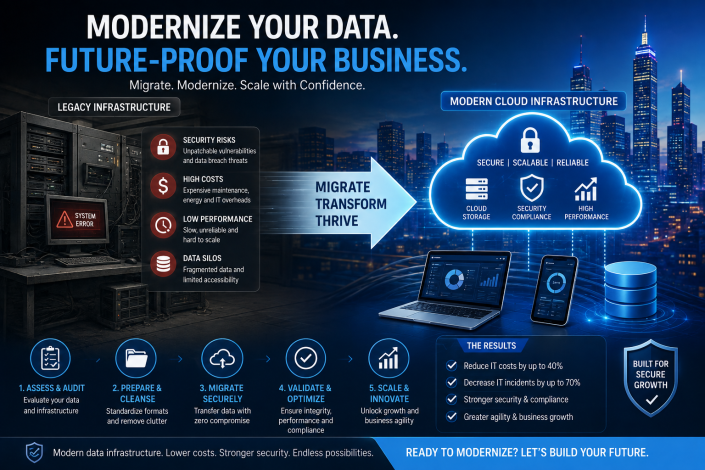
For tech startups and mobile-first businesses in Australia, data is without a doubt the most valuable asset. However, as these ambitious companies rapidly scale their operations, their original data storage solutions often struggle to keep up. Many organisations find themselves relying on aging on-premise servers, fragmented digital environments, or basic local hard drives that were never designed for enterprise-level workloads. Maintaining these legacy systems is not just an operational headache, but it is also a significant financial and cybersecurity liability. A 2025 report on data breaches revealed that organisations running complex hybrid setups of legacy software and cloud systems face average breach costs exceeding five million dollars. To remain competitive and secure, modernising legacy data infrastructure is no longer optional.
The Financial and Security Toll of Outdated Systems
Business leaders often underestimate the sheer financial drain of holding onto older infrastructure. According to a 2024 enterprise survey, businesses consistently misjudge the true total cost of ownership for legacy systems by 70 to 80 percent. In many cases, IT departments spend the vast majority of their budgets simply maintaining outdated hardware, paying for excessive energy consumption, and patching legacy software. This reactive maintenance leaves almost no capital for genuine digital innovation or product development.
From a security perspective, the risks are equally severe. The Australian Cyber Security Centre recently urged domestic businesses to prioritise replacing legacy technology to defend against escalating ransomware attacks. Unpatchable security vulnerabilities are widely considered the most dangerous consequence of retaining older systems. Fortunately, the financial upside of upgrading is substantial. As detailed in a recent report from McKinsey & Company, adopting cloud technology to standardise and automate IT processes allows companies to reduce IT overhead costs by 30 to 40 percent and decrease IT incidents by up to 70 percent.
Crucial Steps Before Moving Your Data
Transitioning from local file storage to a highly scalable cloud network is a complex undertaking that requires meticulous planning. Before any massive system overhaul begins, businesses must ensure their digital assets are clean, readable, and properly formatted. If you migrate disorganised or incompatible files into a new enterprise environment, you will only replicate your existing problems on a much larger scale. Standardising data workflows and leveraging a reliable data converter online is a mandatory first step in preparing your operational files for a modern, highly integrated environment.
Once the data is cleaned and formats are properly standardised, the actual movement of files must be handled with extreme care. Safely transferring massive volumes of digital assets has become a major financial undertaking, sometimes accounting for up to 50 percent of a total IT modernisation budget. To seamlessly transfer complex digital assets without experiencing crippling system downtime, growing companies frequently partner with experts who offer professional data migration services. Engaging with dedicated specialists ensures that data integrity is maintained throughout the entire transfer process and that enterprise-grade security protocols are strictly followed.
Best Practices for a Successful Transition
Even with the right preparation, digital transformation projects require a strategic and disciplined approach. Approximately 83 percent of enterprise migration projects fail to meet their deadlines or exceed their initial budgets due to unforeseen data quality issues. To avoid these common pitfalls, tech and mobile-first companies should follow several proven strategies when modernising their infrastructure.
- Audit and consolidate early: Identify exactly what data needs to be moved and what can be safely archived or permanently deleted. Cloud-mature organisations actively consolidate the disjointed data generated by everyday operations long before they begin their system upgrades.
- Implement automated validation tools: With significant industry shifts occurring, such as the pending decommissioning of legacy ERP platforms, companies must use automated validation tools to expose compatibility challenges early and prevent unexpected business downtime.
- Adopt a phased approach: Rather than attempting to move everything at once, transition non-critical systems first. This allows IT teams to identify potential network bottlenecks and refine their protocols before migrating highly sensitive customer databases.
- Focus on regulatory compliance: In Australia, recent legislative reforms to the Security of Critical Infrastructure Act strictly clarify the obligations for operators to secure and modernise systems that hold business-critical data. Compliance measures, including adherence to the Notifiable Data Breaches scheme, must be factored into every single stage of the planning phase.
Companies that execute these steps well often see incredible operational returns. For example, major global brands like Coca-Cola have successfully executed massive enterprise transitions to modern cloud architectures, ultimately achieving significant reductions in IT operating costs while boosting overall agility.
Securing the Future of Your Business
For mobile-first businesses, system speed, reliability, and security are everything. Relying on outdated data infrastructure is a guaranteed way to slow down growth, artificially inflate operational costs, and expose sensitive customer data to unnecessary cybersecurity risks. By taking the time to standardise digital assets, carefully planning the physical transfer process, and upgrading to robust cloud computing environments, technology companies can build a highly scalable and secure foundation for the future.